


In the ever-evolving world of digital marketing, staying ahead of the curve is not just an advantage—it’s a necessity. For years, Search Engine Optimization (SEO) has been the cornerstone of online visibility. But as we step into 2026, a new paradigm is emerging: Generative Engine Optimization, or GEO. This revolutionary approach is redefining how brands are discovered, engaged with, and trusted in an AI-first digital ecosystem
The Shift from SEO to GEO
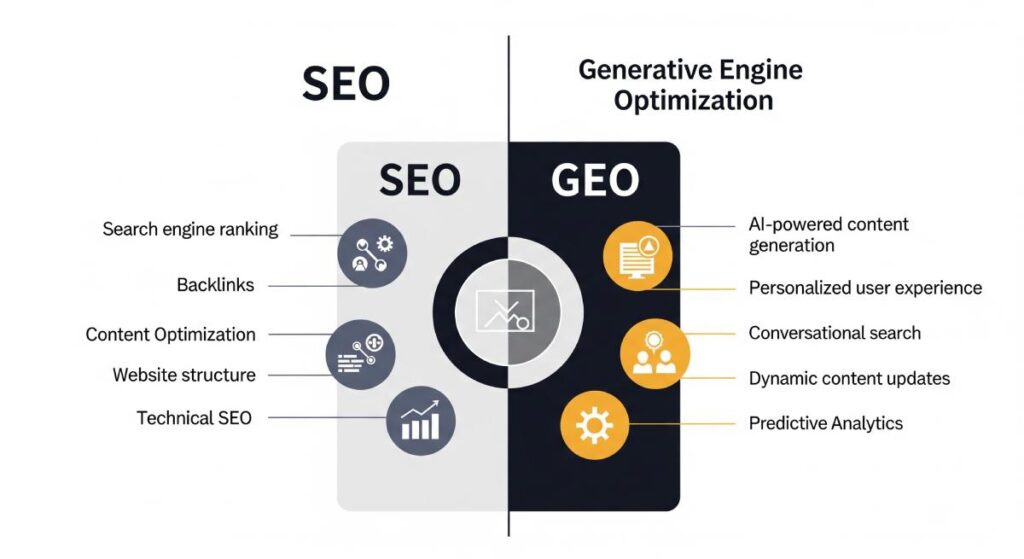
Traditional SEO was built around optimizing content for search engines like Google and Bing. The goal was simple: rank higher in search results to drive clicks and traffic. Marketers focused on keywords, backlinks, meta tags, and technical performance to climb the SERPs (Search Engine Results Pages). But the landscape has changed dramatically.
With the rise of AI-powered tools like ChatGPT, Google’s Search Generative Experience (SGE), Gemini, and Microsoft Copilot, users are no longer just searching—they’re conversing. Instead of scrolling through links, they’re receiving direct answers. This shift has given birth to GEO, a strategy that focuses on optimizing content for generative engines rather than traditional search engines
What Is GEO?
GEO stands for Generative Engine Optimization. It’s a content strategy designed to make your brand visible within AI-generated responses. Unlike SEO, which aims to rank your website on a list of search results, GEO ensures your content is cited, summarized, or directly referenced by AI tools that generate answers to user queries.
In simpler terms, GEO helps your content become the answer—not just a clickable link. Whether users are asking questions via voice assistants, chatbots, or AI search platforms, GEO ensures your brand is part of the conversation.
Why GEO Matters in 2026
The digital behavior of consumers has undergone a seismic shift. According to recent studies, nearly half of all Google searches now include AI-generated summaries. Chatbots like ChatGPT and Claude are being used for everything from product research to decision-making. Referral traffic from these platforms has surged, and AI Overviews are dominating mobile screens.
Here’s why GEO is becoming indispensable:
- AI Is the New Gatekeeper: Generative engines decide what information users see. If your content isn’t optimized for these engines, it might never be surfaced.
- Citation Is the New Click: Visibility now depends on being referenced by AI, not just ranking on a page.
- Facts Beat Fluff: AI prefers structured, factual, and entity-rich content over vague narratives.
- Voice and Conversational Search: With smart assistants becoming mainstream, GEO ensures your content is ready for voice-activated queries.
How GEO Works
GEO is built on a few key principles that differ significantly from traditional SEO:
1. Entity Optimization
AI models understand relationships between entities—people, products, places, and concepts. GEO involves tagging and structuring these entities so that generative engines can easily interpret and reuse your content.
2. Schema Markup
Using schema.org structures, marketers can clarify the meaning of their content. This helps AI engines understand context, intent, and relevance, making it more likely for your content to be cited.
3. Fact-First Writing
Generative engines prioritize clarity and precision. GEO content is written to answer questions directly, using verifiable data and concise language.
4. Citation Engineering
Encouraging reputable domains to reference your content increases its trustworthiness. The more your brand is cited across the web, the more likely it is to appear in AI-generated responses.
5. AI Accessibility
Tools like llms.txt help configure and verify that your site is accessible to large language models (LLMs). This ensures your content can be crawled, understood, and used by generative engines.
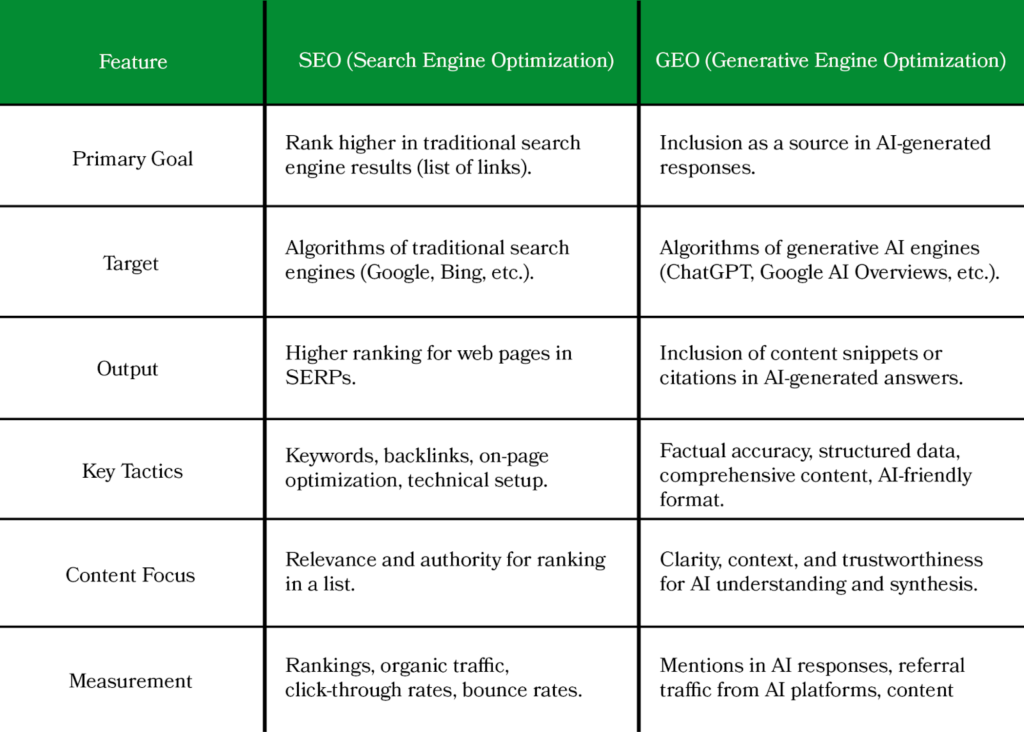
GEO vs SEO: Key Differences
Implementing GEO: A Step-by-Step Guide
If you’re ready to future-proof your digital strategy, here’s how to get started with GEO:
Step 1: Audit Your Content
Use tools like AthenaHQ or ASDM’s GEO audit platforms to evaluate how your current content performs in AI environments. Identify gaps in schema, entity tagging, and factual clarity.
Step 2: Rewrite for AI
Transform your content into answerable formats. Focus on FAQs, how-to guides, and data-driven insights. Avoid fluff and prioritize clarity.
Step 3: Add Structured Data
Implement schema markup to define relationships and context. This helps AI engines understand your content better.
Step 4: Build Citation Networks
Reach out to reputable sites for backlinks and citations. The more your brand is referenced, the higher its credibility in AI responses.
Step 5: Monitor AI Visibility
Track your brand’s presence across generative platforms. Use analytics to measure citation velocity, share of voice, and AI engagement.
GEO in Action: Real-World Examples
Let’s look at how GEO is transforming digital visibility:
- E-commerce: A fashion brand optimized its product descriptions with entity tags and schema. When users asked ChatGPT for “best summer dresses under $50,” the brand’s products were cited directly in the response.
- Education: A digital marketing institute in Delhi structured its course pages with clear FAQs and schema. When students queried Gemini about “top digital marketing courses in India,” the institute was featured in the AI summary.
- Healthcare: A clinic published fact-based articles on common conditions. These were picked up by AI tools like Perplexity and used in health-related queries.
Challenges and Considerations
While GEO offers immense potential, it comes with its own set of challenges:
- Lack of Standards: Unlike SEO, GEO is still evolving. Best practices are emerging, but not yet standardized.
- AI Bias: Generative engines may favor certain sources or formats. Ensuring fairness and diversity in citations is an ongoing concern.
- Technical Complexity: Implementing schema, entity optimization, and AI accessibility requires technical know-how.
The Future of GEO
As AI continues to reshape how we interact with information, GEO will become the cornerstone of digital strategy. By 2026, we can expect:
- Dedicated GEO Platforms: Tools that help brands audit, optimize, and track AI visibility in real time.
- AI-First Content Teams: Writers trained to create content specifically for generative engines.
- Integration with Voice Search: GEO content will power smart assistants and voice-activated devices.
- Cross-Platform Optimization: GEO strategies will extend beyond websites to include social media, video, and even AR/VR environments.
Frequently Asked Questions (FAQ)
1. What does GEO stand for in digital marketing?
GEO stands for Generative Engine Optimization. It’s a strategy focused on optimizing content for AI-powered generative engines like ChatGPT, Gemini, and Microsoft Copilot, ensuring your brand is cited and referenced in AI-generated answers.
2. How is GEO different from traditional SEO?
While SEO aims to rank websites in search engine results, GEO ensures your content is visible within AI-generated responses. GEO focuses on structured data, factual clarity, and entity optimization to help AI tools understand and reuse your content.
3. Why is GEO important in 2026?
With the rise of AI search experiences and conversational interfaces, users are getting direct answers instead of browsing links. GEO helps your brand become part of those answers, increasing visibility and trust in an AI-first digital world.
4. What kind of content works best for GEO?
Content that is fact-based, concise, and question-driven performs best. FAQs, how-to guides, product comparisons, and structured data-rich articles are ideal for GEO optimization.
5. How can I make my website GEO-friendly?
Start by:
- Implementing schema markup for structured data
- Using tools like llms.txt to ensure AI accessibility
- Writing content that answers specific questions clearly
- Building citation networks with reputable sources
6. Will GEO replace SEO completely?
Not entirely. GEO complements SEO. While SEO still matters for traditional search engines, GEO is essential for visibility in AI-generated environments, which are rapidly becoming dominant.
7. What tools can help with GEO optimization?
Emerging platforms like AthenaHQ, ASDM GEO audit tools, and AI citation trackers can help audit and optimize your content for generative engines.
8. How do I track GEO performance?
Instead of clicks and rankings, GEO success is measured by:
- Citation frequency in AI responses
- Share of voice across generative platforms
- Visibility in AI summaries and answers
9. Is GEO relevant for small businesses or local brands?
Absolutely. GEO can help local businesses appear in AI-generated recommendations, especially for voice search and mobile queries like “best digital marketing institute near me.”
10. What’s the future of GEO?
GEO will evolve with:
- Dedicated optimization platforms
- AI-first content teams
- Integration with voice assistants and smart devices
- Cross-platform visibility across web, social, and immersive media